 ქართული
 English

Sculptural Forms in Contemporary Interior Design
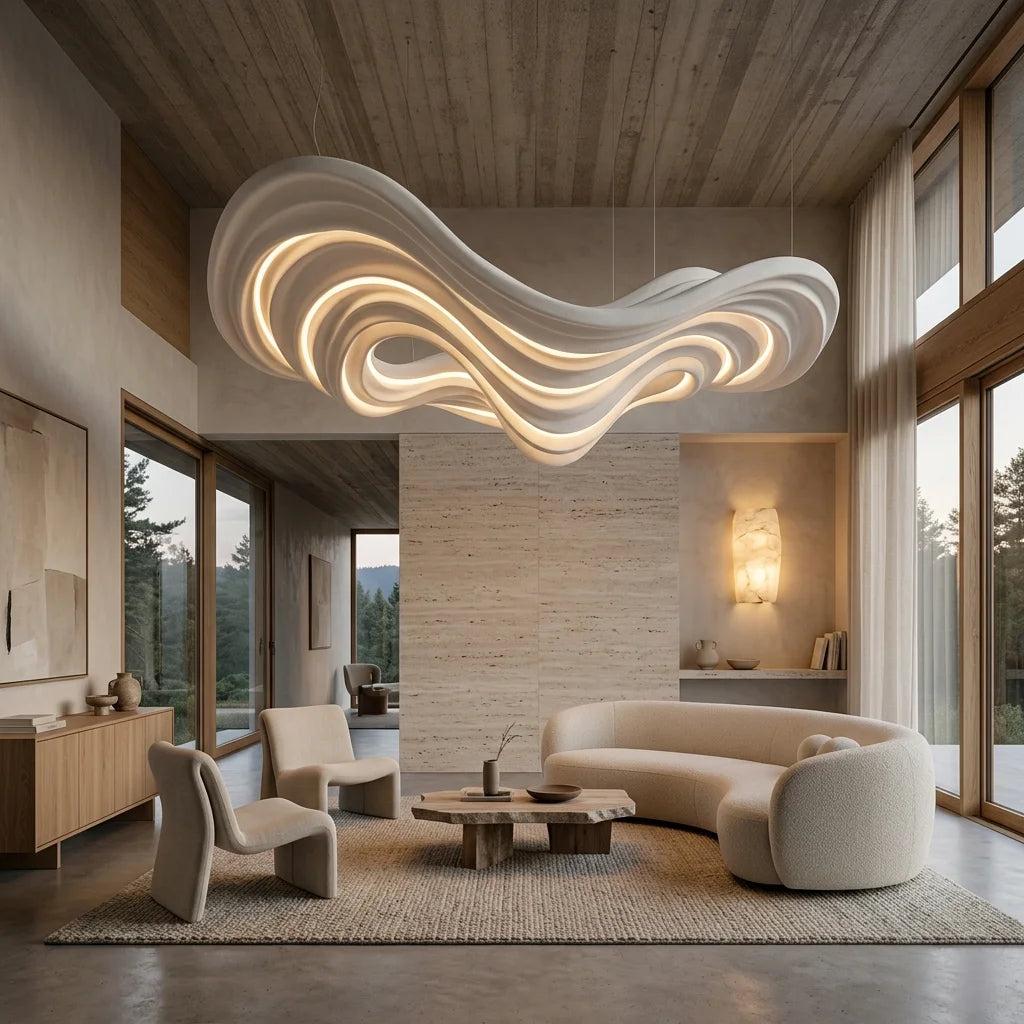
Sculptural forms in interior design refer to the use of furniture and decorative objects whose shapes, volumes, and silhouettes attract special attention. These can include uniquely shaped armchairs, curved sofas, unconventional coffee tables, solid stone consoles, or statement lighting fixtures. Each of these elements adds an individual character to a space and is often perceived as a work of art in its own right. One of the main characteristics of this trend is the replacement of sharp geometric lines with softer, more natural, and organic forms. While straight lines and clearly defined geometry dominated minimalist interiors for many years, today we increasingly see rounded edges, flowing surfaces, and asymmetrical silhouettes. This is particularly evident in upholstered furniture. Curved sofas, voluminous armchairs, and unconventional ottomans make a space feel more dynamic and visually appealing. At the same time, their soft contours enhance the feeling of comfort and tranquility within the interior.
1. Choosing the Right Materials
Natural stone, travertine, marble, wood, and various textured surfaces are particularly popular in contemporary interior design.For example, a travertine coffee table can become the focal point of a living room. Its natural pores, subtle color variations, and solid form give the space a distinctive character.The use of wood in unconventional shapes is also worth highlighting. Rounded edges, monolithic structures, and pronounced textures give furniture a more architectural appearance.It is important to understand that in such interiors, materials are not used solely for their visual appeal. Their natural texture, surface finish, and tactile qualities play a key role in shaping the overall perception and atmosphere of the space.
2.Choosing the Right Color Palette
When sculptural furniture and distinctive shapes are used in an interior, choosing the right color palette becomes particularly important.Such spaces often feature neutral and natural tones, including warm beige, sand, cream, brown, ivory, and various natural stone shades.A calm color palette allows us to draw attention to shapes, materials, and textures. At the same time, contrasting elements can be introduced to create a more interesting result — for example, pairing dark wood furniture with light stone surfaces or combining metal details with soft textures.
3.Sculptural Forms in Kitchens and Bathrooms
This design direction is not limited to living rooms and bedrooms. Sculptural design is also becoming increasingly popular in kitchen and bathroom interiors.In kitchens, particularly interesting features include islands with rounded corners, monolithic stone surfaces, and dining tables with unconventional shapes. These design solutions transform the kitchen from a purely functional workspace into an important architectural element of the interior.In bathrooms, special attention is given to freestanding washbasins, monolithic stone forms, rounded mirrors, and uniquely designed faucets. Every detail has the potential to become the main decorative focal point of the space.
At least Sculptural design demonstrates that, in contemporary interiors, art and functionality are no longer separate concepts. Furniture can serve a practical purpose while simultaneously becoming the main visual focal point of a space.