 ქართული
 English

7 Golden Rules of Proper Kitchen Planning
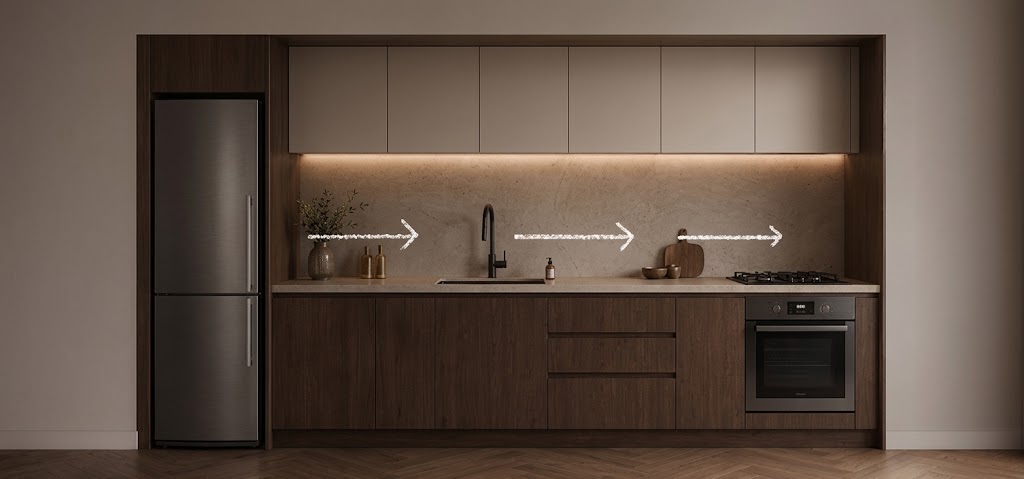
Kitchen design is not just a combination of beautiful facades and modern appliances. First and foremost, it should be tailored to daily life and comfort. Often, a kitchen that looks ideal in photos turns out to be uncomfortable in reality, which is caused by poor planning.
1. The Work Triangle
The main principle of planning is logically connecting the refrigerator, sink, and stove. The right distance between these three zones reduces unnecessary movement and significantly simplifies the process.
2. Countertop Space Distribution
Creating a triangle alone is not enough. Sufficient space is essential between the sink and stove for food preparation, along with a safe area next to the stove to place hot cookware.
3. Clearance and Traffic Flow
Opening cabinets, drawers, and appliance doors should not obstruct each other or block the pathway. In small spaces, every centimeter must be used thoughtfully.
4. Individual Functionality
The space should adapt to your lifestyle. Before thinking about aesthetics, answer these questions: How often do you cook? How many people use the space at the same time? Which appliances do you need daily?
5. Logical Storage System
Place daily-use items in easily accessible locations, and rarely used ones in higher cabinets. Appliance placement must also be practical—for instance, the dishwasher should strictly be located near the sink.
6. Multi-Layered Lighting
A single central overhead light is not enough, as it casts shadows on the work surfaces. A combination of general and task lighting is necessary. Also consider natural light so that tall furniture does not make the space overly dark.
7. Durable Materials
Kitchen surfaces endure daily wear and tear, making durability, moisture resistance, and ease of maintenance much more important than looks alone.
Ultimately, a good kitchen begins not with choosing cabinet colors or handles, but with the question: How do we use this space every day? Proper planning saves you from daily discomfort and costly future modifications.